New Build Coming? Why Site Preparation Is the Most Important First Step
Quick Answer: Site preparation is the step that decides whether everything built afterward stays put. Before a foundation goes in, the ground has to be cleared of trees and organic matter, shaped with a grade that moves water away from the structure, drained so runoff has somewhere to go, and compacted to a density that won't settle under the weight of a slab. Skipping or rushing any one of those steps doesn't save time. It just moves the problem underground, where it shows up later as a cracked slab, a wet crawlspace, or a foundation that shifts. On sloped, clay-heavy Northeast Tennessee lots, the margin for error is even smaller.
The survey stakes are already in the yard, the plans are printed, and the concrete crew has a date on the calendar. Behind the stakes, the lot itself is still rough — knee-high broom sedge across most of it, a slope that drops several feet from the road to the back corner, and a low spot in the middle that's held water since the last hard rain. Nobody has touched the ground yet. The framing crew is two weeks out.
This is the moment that decides more about a new build than almost anything that happens after it. A foundation poured on unprepared ground is only as good as what's underneath it, no matter how well the concrete finisher does the surface. Clearing, grading, drainage, soil compaction, and locating buried utilities aren't preliminary chores to get out of the way before the "real" construction starts. They're the work that determines whether the real construction holds up.
What Site Preparation Actually Covers
"Site prep" gets used as a catch-all term, and that's part of why it's easy to underestimate. On an actual job, it breaks into distinct tasks that each protect a different part of the finished building.
Clearing and grubbing takes trees, stumps, brush, and topsoil off the building footprint and the working area around it. This isn't just cosmetic. Roots and buried organic material decompose over time, leaving voids under a slab that nobody can see until it settles.
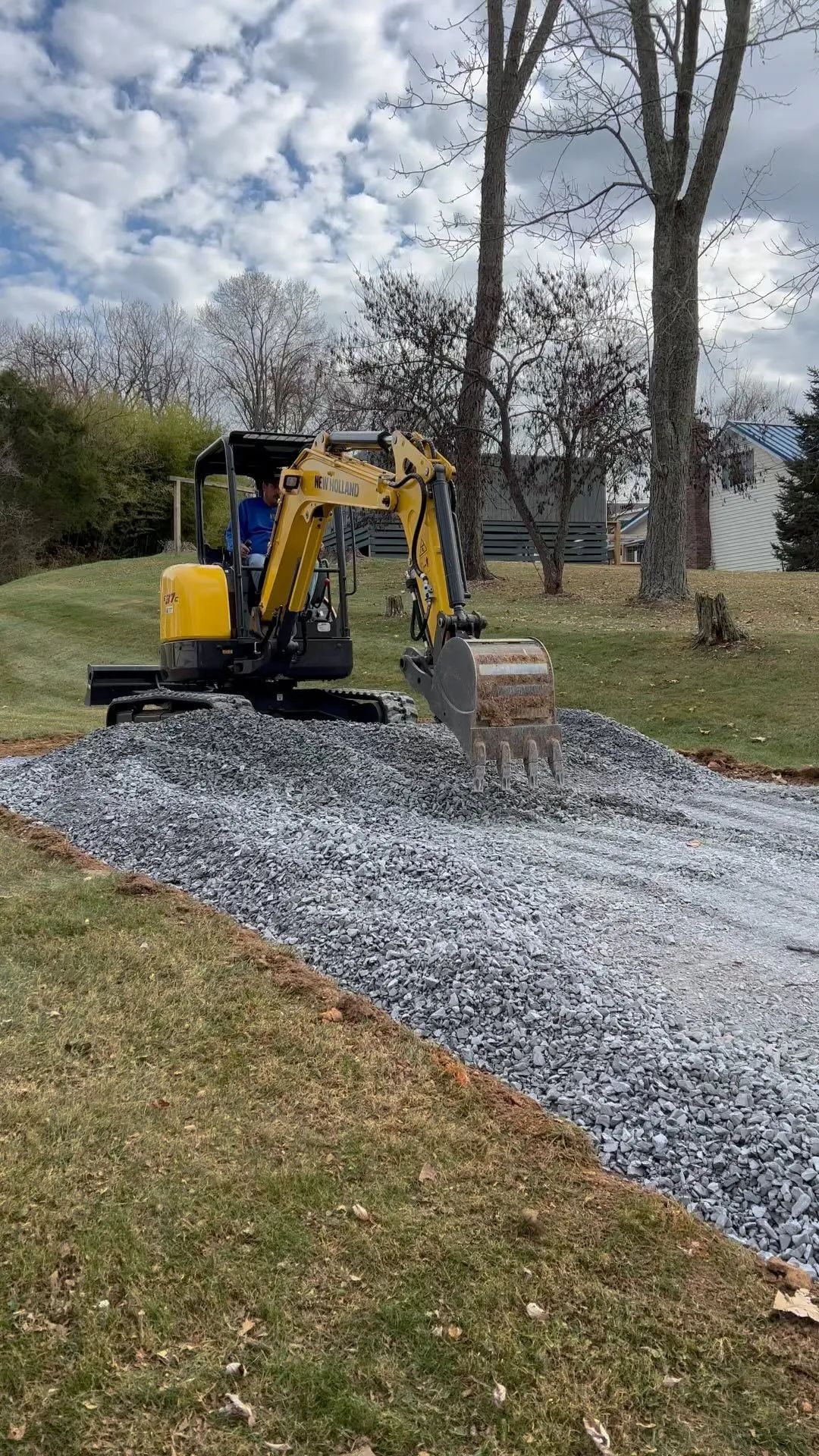
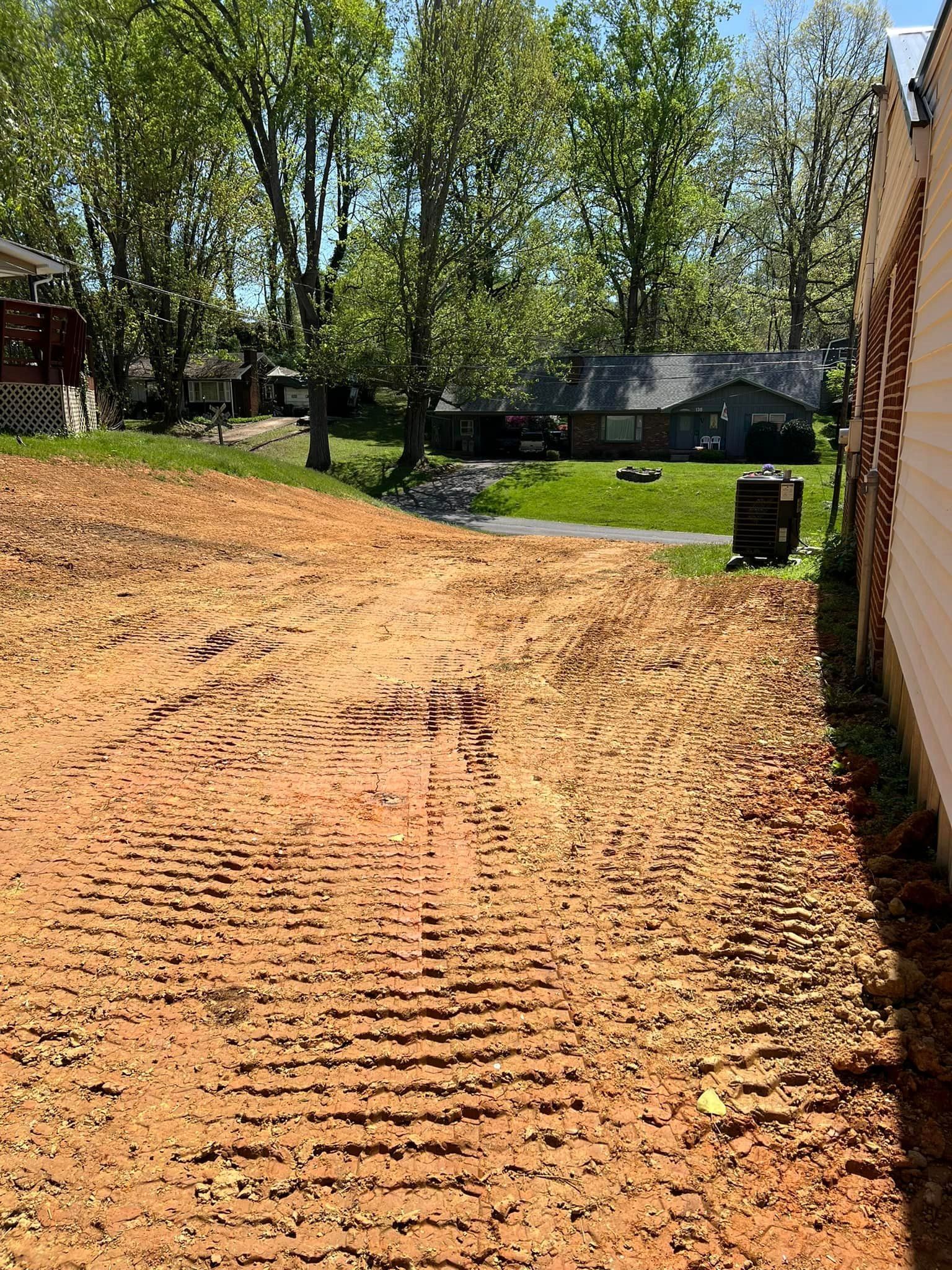
Rough and finish grading reshapes the land so the pad sits level and water sheds away from the structure instead of toward it. Rough grading establishes the basic contours. Finish grading fine-tunes the surface for the exact elevations the plans call for.
Drainage planning lays out swales, ditches, or piped systems to carry the water the grading redirects. Grading without a place for that water to go just relocates the problem to a neighbor's yard or the edge of the driveway.
Soil compaction packs fill and disturbed native soil into controlled layers so the ground under the foundation won't settle unevenly once it carries the weight of a house or shop.
Utility marking locates and flags the water, gas, electric, and communication lines already running through the property before any trenching or heavy excavation starts.
Each step leans on the one before it. Grade a site that hasn't been cleared and you just bury stumps under fill. Compact soil that hasn't been graded to drain and you lock moisture into the base. Order matters here almost as much as the individual tasks do.
Clearing the Land: More Than Cutting Brush
Clearing a build site means more than knocking down trees and hauling brush. Stumps have to be pulled or ground out, not just cut flush — a stump left in the ground rots over years and leaves a soft pocket exactly where a slab or footing might sit. Topsoil is full of organic matter that keeps decomposing and compressing, so it gets stripped from the building footprint and stockpiled for later landscaping rather than buried under fill, where it would settle unevenly for years.
Not every tree on a lot needs to come down. Trees outside the building envelope and driveway path can often stay, which preserves shade, screening, and property value, as long as their root systems sit clear of the grading and utility trenches. Mapping what stays and what goes before equipment moves in keeps a job from clearing more than the project actually needs.
Grading: The Shape That Protects Everything Built On It
Grading gives the site its final shape, and that shape does more work than most people realize once the building is finished.
The pad has to be level and stable. A foundation needs a flat, uniform surface to bear evenly — uneven support under a slab is one of the more common reasons cracking shows up months or years after a project wraps.
The surrounding grade has to slope away from the structure, too. Model residential building code calls for the ground immediately around a foundation to drop at least six inches over the first ten feet, and for paved or other impervious surfaces near the building to slope at a minimum of two percent away from it. That's not a suggestion. It's the difference between rainwater running off and rainwater pooling against the foundation wall.
Rough grading and finish grading are two different jobs, even though they sound like one. Rough grading with heavy equipment establishes the basic contours and drainage paths. Finish grading smooths the surface to the exact elevations the plans require, so the site transitions cleanly into a slab, a driveway, or landscaping without leaving low spots that collect water later.
Tip: If a site is being graded ahead of a build, walk it after the next rain before any dirt work starts. Where the water sits or runs on the raw ground shows you the drainage problems the grading plan actually needs to solve, rather than guessing from a flat set of plans.
Drainage: Where the Water Goes After Grading Moves It
Grading changes the direction water travels. Drainage decides where it ends up. The two have to work together — a well-graded pad that empties runoff into a spot with no outlet just creates a new wet area a few feet from the old one.
A shallow, vegetated swale or ditch can carry water shed by the grading around the building and off toward a natural low point or storm system, without concentrating enough flow in one place to erode. Where a driveway or access road crosses a natural drainage path, a culvert lets that water pass underneath instead of pooling against the crossing or washing over it.
Federal stormwater rules require sites disturbing an acre or more of land to install and maintain erosion and sediment controls, like silt fences and stabilized entrances, and to stabilize any area where work has stopped for more than fourteen days. Even on smaller residential lots the same logic holds. Exposed, disturbed soil on a slope is going to move somewhere during the next storm, and it's far cheaper to control that with a plan than to clean up the sediment afterward.
Soil Compaction: The Ground Under the Slab
Compaction gets less attention than clearing or grading because it happens out of sight, under the fill, before the slab ever goes down. It's also one of the most common reasons a finished structure develops problems years after the crew has left.
Freshly placed fill, or native soil that's been disturbed by grading, contains air pockets between the particles. Under the sustained weight of a foundation, those pockets compress over time, and the ground settles unevenly wherever the compaction was inconsistent.
Fill gets placed and compacted in controlled lifts, typically eight to twelve inches at a time, because compaction equipment can only densify soil to a limited depth. Each layer has to reach the target density before the next one goes on top. Structural fill and building pads are commonly specified to reach roughly ninety-five to ninety-eight percent of the soil's Standard Proctor maximum dry density — a lab-tested benchmark for how dense that particular soil can get. Fall short on even one layer, and a soft zone can end up buried under several feet of otherwise solid fill.
Moisture matters just as much as pressure does. Soil compacts best at a specific moisture content. Too dry, and the particles won't lock together no matter how many passes a roller makes. Too wet, and the soil pumps and shifts under the equipment instead of consolidating.
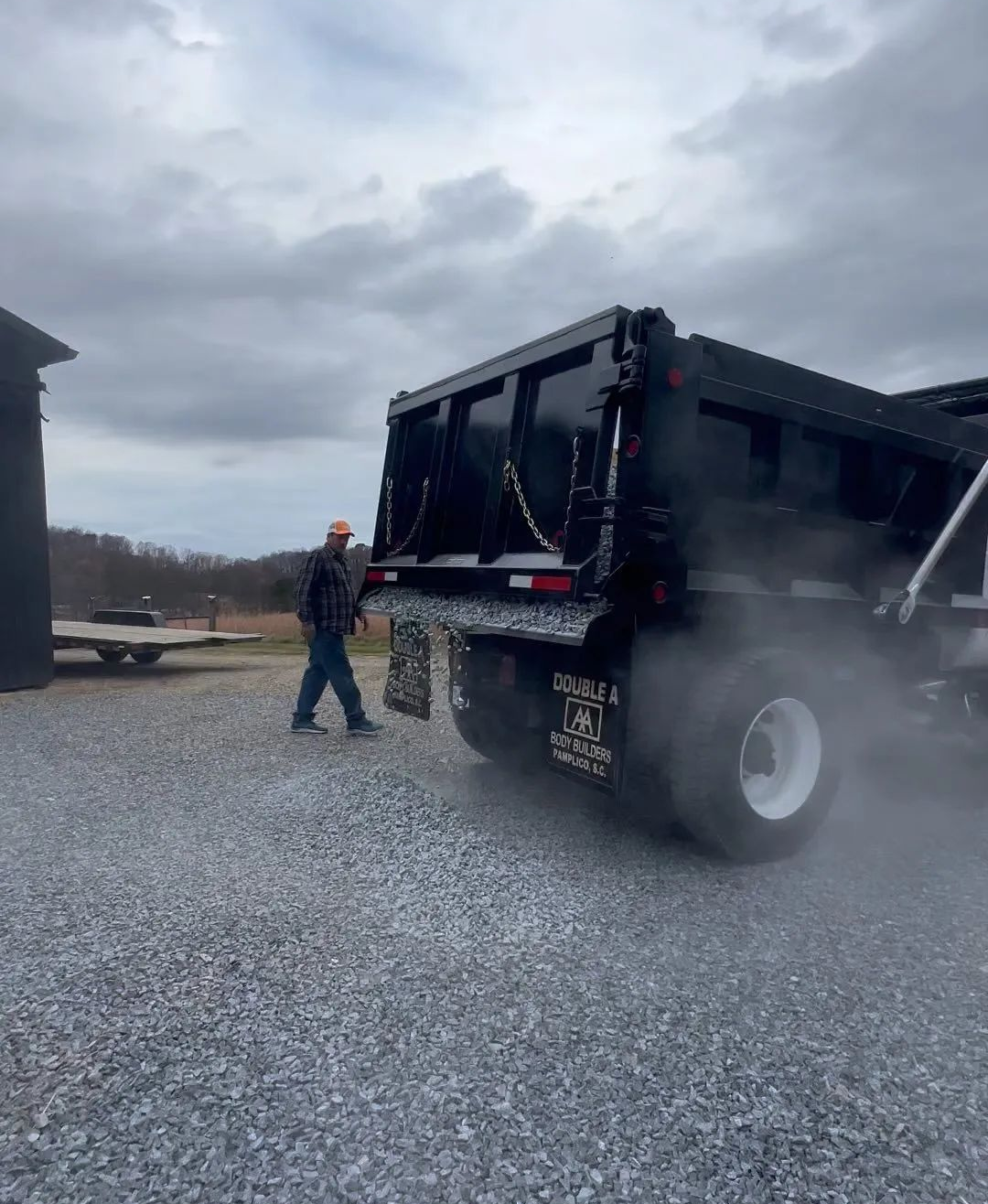
Warning: Don't assume fill dirt delivered to a site is automatically suitable for building on. Not all soil compacts the same way, and the clay-heavy material common across Northeast Tennessee needs the right moisture content and enough passes with the right equipment to reach a safe density. Have the base tested before framing starts on any structure carrying real weight.
Utility Marking: What's Already Underground Before You Dig
Every developed lot has something buried in it, even a lot that looks completely raw. Water and sewer lines, buried electric, gas service, and communication cable can run through a property in places that aren't obvious from the surface.
Calling before digging is standard practice, not optional caution. The national 811 service exists specifically so property owners and contractors can request that utility companies locate and mark their buried lines before any excavation begins. It's meant to be used a few business days ahead of any digging, from setting fence posts to full-scale grading.
Marking has to happen before grading and trenching start, not during. Once heavy equipment starts moving earth, an unmarked line stops being a known obstacle and becomes a hazard. On a site headed for clearing, grading, and trenching for new utility service, locating what already exists underground is one of the first calls that should happen — not one of the last.
Site Preparation in the Northeast Tennessee Hills
Terrain changes what site preparation has to account for, and the hills around Jonesborough, Johnson City, and the surrounding counties are rarely flat. A sloped lot means grading has to manage more elevation change to reach a level pad, which usually means more cut and fill and a more deliberate drainage plan to keep water from gaining speed and force as it moves downhill toward the structure.
The clay-heavy soils common across the region make the compaction question harder, too. Clay holds water longer than sandier soils, so it needs closer attention to moisture content before it will compact to a safe density, and it stays soft longer after a rain — which affects when equipment can even get on site to do the work. Heavy, sudden mountain storms add urgency to the drainage and erosion control side of the job. A slope with disturbed, uncompacted soil and no erosion controls in place can lose a meaningful amount of ground in a single storm.
None of that makes building on a hillside lot a problem. It means the
site preparation has to be scaled to the terrain instead of borrowed from a flat, sandy lot two states over.
Frequently Asked Questions
How long does site preparation take before a new build can start?
It depends on the lot. A small, clear residential lot with decent soil can be ready in days. Wooded, sloped, or clay-heavy lots needing clearing, grading, and compaction testing often take one to two weeks.
What happens if a foundation is poured without proper site preparation?
Common outcomes include uneven settling that cracks the slab, water intrusion because the grade fails to shed rain, and doors, windows, or flooring shifting out of square. These problems usually surface months or years later.
Do I need to clear my entire lot before building, or just the building footprint?
Most projects only need to clear the building footprint, the access route, and a working buffer for equipment. Trees outside that zone can often stay if roots won't interfere with grading, compaction, or utility trenches.
Why does soil compaction matter if the ground already looks solid?
Ground that looks firm can still hide loose fill or air pockets, especially after grading moves earth around. Compaction gets tested because it verifies soil density at the depth where a foundation's weight actually rests.
Does a sloped lot need more site preparation than a flat one?
Generally, yes. Sloped lots need more cut-and-fill grading to create a level building pad, a more careful drainage plan since water moves faster downhill, and closer attention to erosion control while the soil stays disturbed.
Can I skip a soil test and just trust the fill dirt looks fine?
Skipping a soil test on a load-bearing area is a gamble, and its cost is hard to see until the structure is built. Visual inspection can't confirm density, and a quick compaction test catches problems.
Why the Groundwork Determines the Home's Future
A finished build looks like the sum of framing, concrete, and finish work, but none of it holds without what happened weeks earlier, out of sight. Clearing removes what would rot beneath a slab. Grading and drainage decide whether rain becomes background noise or a slow structural threat. Compaction determines whether a foundation stays level for decades instead of years. Absolute One Properties has spent 30 years reading how ground behaves before a single yard of concrete goes down, because that reading is what the rest of the build depends on.
Sloped, clay-heavy lots throughout Jonesborough, TN don't forgive shortcuts the way flatter, sandier ground sometimes does. A pad that's cleared, graded, drained, and compacted to match the terrain gives a foundation the stable base it needs to carry decades of weight without shifting. Skipping that step doesn't save time; it just delays the cost and hides it underground. Getting the ground right first is what keeps everything built on top of it standing long after the crews have gone home.