Grading and Drainage: How to Prevent Erosion in Hilly Tennessee Yards
Tennessee's rolling terrain is part of what makes the region beautiful, but those same hills and slopes create real challenges for homeowners when it comes to managing stormwater and protecting their land. Heavy rainfall is a seasonal reality across the state, and when water has nowhere to go, it takes the path of least resistance, pulling soil, gravel, and landscaping along with it. Erosion is not simply a cosmetic problem. Left unaddressed, it undermines foundations, damages driveways, and strips topsoil that took decades to develop.
Proper grading and drainage are not afterthoughts. They are foundational decisions that determine how your property handles every rain event, every snowmelt, and every ground saturation cycle. Whether you are managing a residential lot in the mountains of East Tennessee or a rural property with significant grade change, understanding how water moves across your land is the first step toward protecting it. This guide walks through the core strategies, common mistakes, and proven methods that land and drainage professionals rely on to keep hilly yards stable for the long term.
Understanding How Erosion Works on Hilly Terrain
Why Slope Is the Primary Variable
Erosion is a physics problem at its core. Water accelerates as it moves downhill, and the faster it moves, the more material it can carry. A gentle 2 percent slope sheds water slowly, giving soil time to absorb it. A 20 percent slope sends water rushing across the surface, and that velocity is enough to displace gravel, loosen soil particles, and cut channels into the ground.
In Tennessee, many residential properties sit on grades that fall somewhere between these extremes, but that middle range is where erosion tends to go unnoticed until significant damage has occurred. Small rills form after heavy rain, deepen over multiple seasons, and eventually become gullies. By the time most homeowners take action, the underlying soil structure has already been compromised.
Soil Type and Ground Cover
Tennessee soil composition varies widely depending on the region. The eastern part of the state tends toward clay-heavy soils that resist infiltration and generate high surface runoff. Middle Tennessee often features limestone-based soils with better drainage characteristics. The western region sits on alluvial soils that are fertile but can be highly erodible when exposed.
Bare soil is always more vulnerable than vegetated ground. Root systems bind soil particles together, and organic material on the surface slows water velocity. When grading work removes existing vegetation and ground cover, temporary erosion control measures must go in place immediately, not after the project is complete.
Site Grading as the Foundation of Erosion Control
What Proper Grading Actually Means
Grading is the process of reshaping land to direct water flow in a controlled, intentional way. The goal is not to eliminate slope but to manage where water goes when it reaches your property and where it exits. A properly graded yard moves water away from structures, distributes it across vegetated areas where possible, and channels excess runoff toward designated outlets.
A common standard in residential grading is a minimum 2 percent slope away from foundations for the first ten feet. Beyond that zone, grade depends on the layout of the property and the location of drainage infrastructure. On hilly lots, achieving this standard often requires cut-and-fill work that balances the amount of soil removed from high areas with soil added to low areas.
Common Grading Mistakes That Cause Erosion
One of the most frequent errors on hilly properties is creating a negative grade that directs water toward the house or toward a low point that has no outlet. Pooling water saturates the soil, increases hydrostatic pressure against foundations, and accelerates surface erosion around the perimeter of the affected area.
Another common issue is over-compacted soil following grading work. Heavy equipment compresses the soil profile, reducing its ability to absorb water and increasing the volume of surface runoff. Aerating and amending the soil after grading helps restore infiltration capacity before re-vegetation begins.
Drainage Systems That Work for Hilly Yards
French Drains and Subsurface Systems
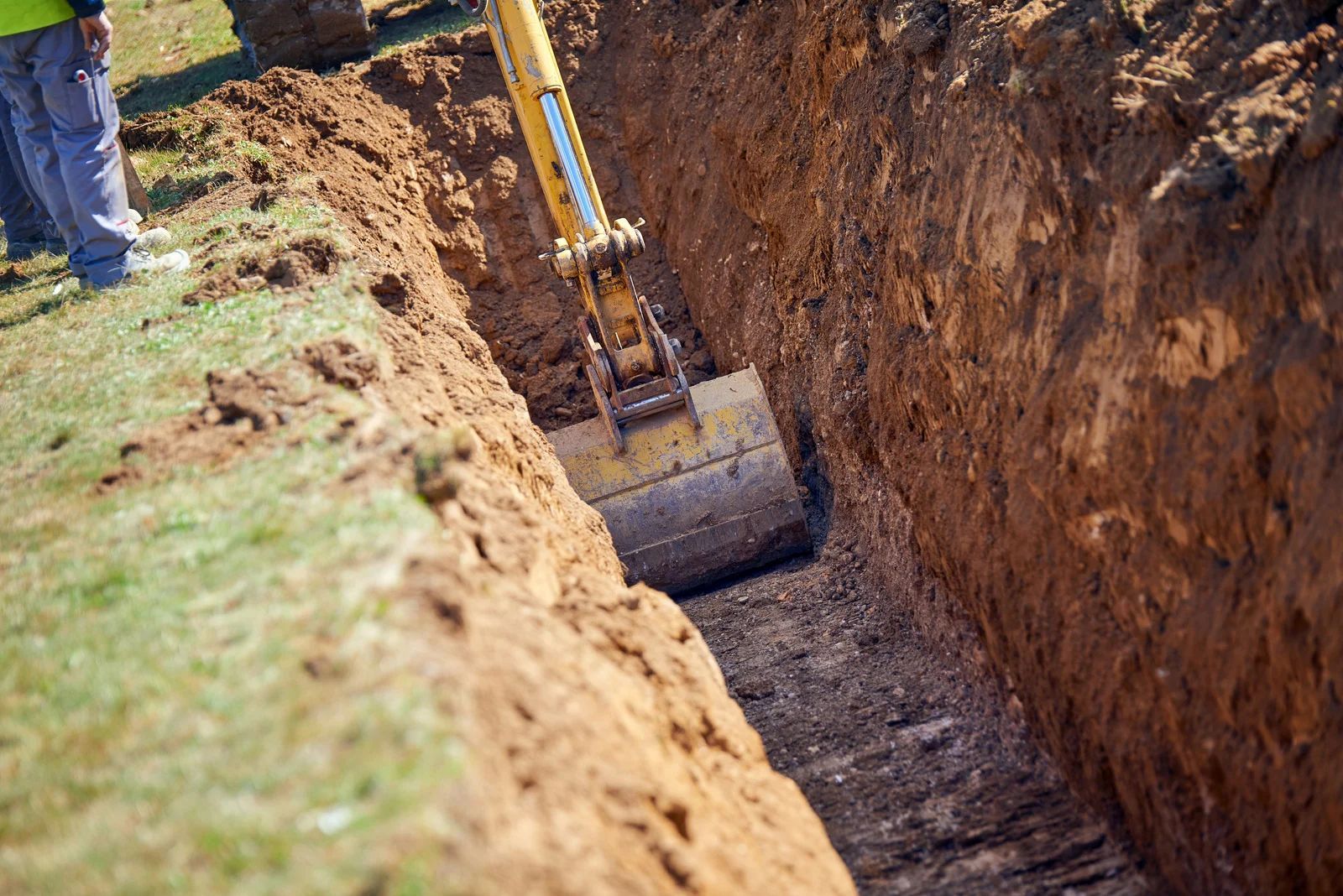
A French drain is a trench filled with gravel and a perforated pipe that intercepts groundwater or surface water before it reaches a problem area. On hilly terrain, French drains are often installed along the uphill side of a structure or retaining wall to relieve hydrostatic pressure and redirect water laterally across the slope rather than straight down.
The key to a successful French drain is proper depth, correct pipe sizing, and a functional outlet point. A drain that terminates in a low spot with no outlet simply creates a new saturation problem. Every subsurface drainage system needs a clear path to daylight, whether that is a swale, a dry creek bed, or a storm drainage connection.
Swales and Surface Channels
A swale is a shallow, vegetated channel designed to slow and redirect surface runoff. Unlike a pipe system, a swale works with the natural landscape, allowing water to infiltrate gradually as it moves toward an outlet. Swales are particularly effective on hilly properties because they can be graded to follow the natural contour of the land, slowing water velocity and reducing its erosive force.
Riprap-lined channels serve a similar function in areas where water volume or velocity is too high for vegetation alone to handle. Placing angular stone along drainage channels protects the soil underneath and prevents channel erosion even during heavy storm events.
Catch Basins and Inlet Structures
In areas where surface drainage converges at a low point, a catch basin collects runoff and routes it through an underground pipe to a controlled outlet. Catch basins are standard in driveways, near garage aprons, and at the base of slopes where water tends to concentrate. On gravel driveways in particular, catch basins at the bottom of a grade protect the driveway surface from washout and prevent sediment from migrating onto adjacent property.
Retaining Walls and Slope Stabilization
When Retaining Walls Are the Right Answer
Retaining walls are structural solutions for slopes that are too steep to stabilize through grading and vegetation alone. A well-built retaining wall holds a mass of soil in place, creates a level or near-level terrace above it, and, when properly designed, includes drainage provisions that prevent water from building up behind the wall face.
Without drainage, retaining walls fail. Hydrostatic pressure from saturated soil behind the wall eventually overcomes the structure's capacity, leading to wall movement, cracking, or full collapse. Weep holes, drainage aggregate, and perforated pipe behind the wall face are standard components of any properly built retaining structure on a hilly Tennessee property.
Terracing as a Long-Term Strategy
On lots with significant continuous slope, a series of terraces separated by retaining walls or compacted earthen berms can transform an erosion-prone hillside into a manageable landscape. Each terrace reduces effective slope length, which directly reduces water velocity and erosion potential. Terracing also creates usable flat space that would otherwise be too steep for practical use.
Vegetation and Ground Cover in Erosion Control
Native Plants and Root Systems
Vegetation is one of the most powerful erosion control tools available, and it costs far less than structural solutions when applied correctly. Deep-rooted native grasses and shrubs bind the soil profile, increase infiltration rates, and reduce the kinetic energy of rainfall before it reaches the ground surface.
In Tennessee, native species like switchgrass, Virginia wild rye, and river oats establish quickly on disturbed slopes and provide year-round erosion resistance. These plants are adapted to local rainfall patterns and soil conditions, which means lower maintenance requirements compared to non-native alternatives.
Temporary Erosion Controls During Construction
Silt fences, erosion control blankets, and hydraulic mulch are temporary measures used to protect disturbed soil during and immediately after grading work. These tools are not permanent solutions, but they are essential for preventing sediment loss during the window between ground disturbance and vegetation establishment. On hilly sites, this window is when the most severe erosion occurs.
Proven Erosion Control From Jonesborough's Most Experienced Crew
Hilly terrain in Tennessee is not inherently a liability, but it does demand a thoughtful approach to water management. Proper grading directs runoff away from structures and toward controlled outlets. Well-designed drainage systems handle the water that grading alone cannot. Retaining walls stabilize slopes where the grade is too steep for vegetation and grading to manage alone. And strong ground cover ties it all together by protecting the soil surface between every rain event. These are not independent solutions. They work as an integrated system, and the strength of that system depends on how well each component is planned and executed. Investing in professional grading and drainage work at the outset is far less costly than repairing erosion damage, foundation issues, or failed driveways years down the line.
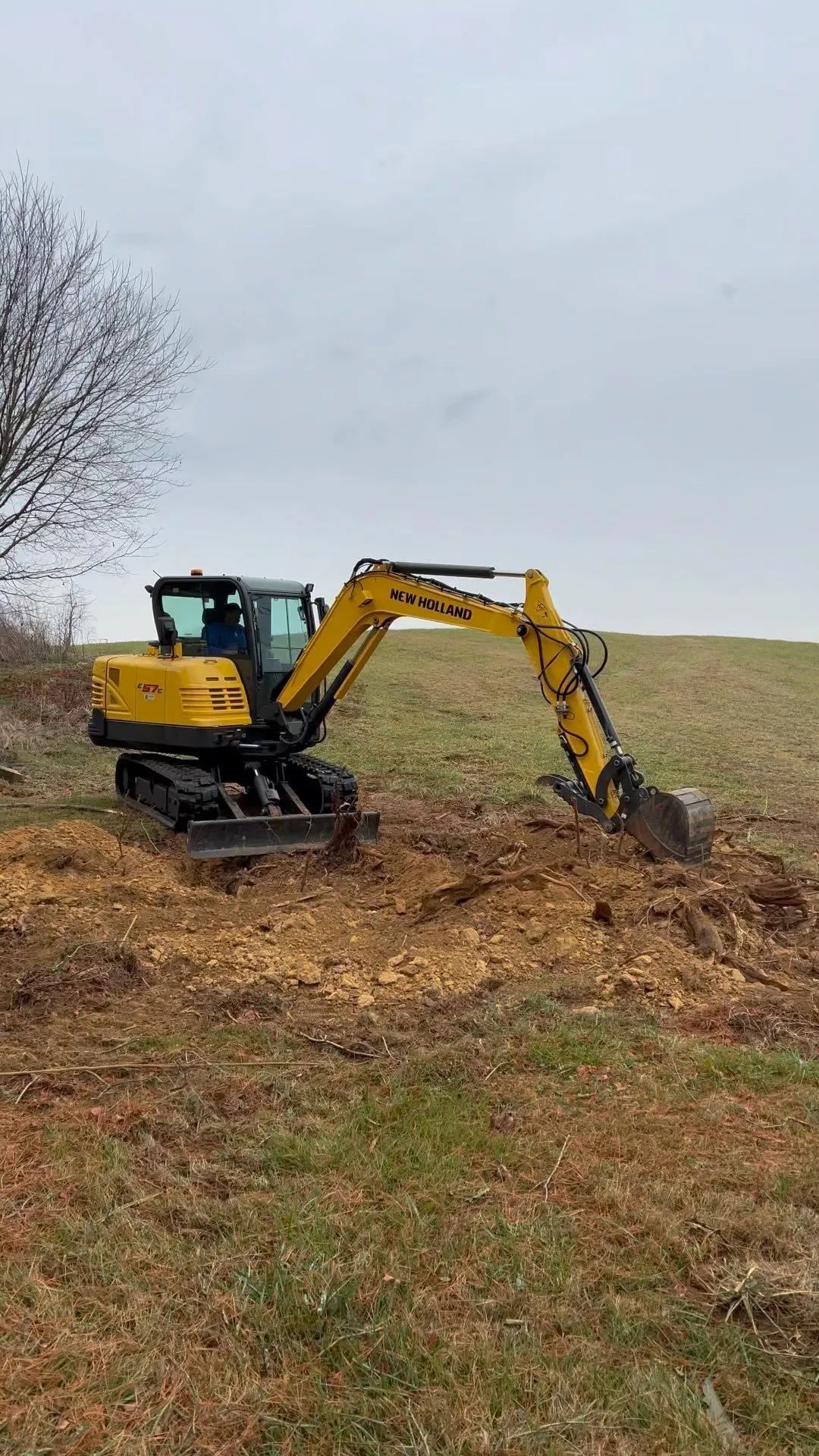
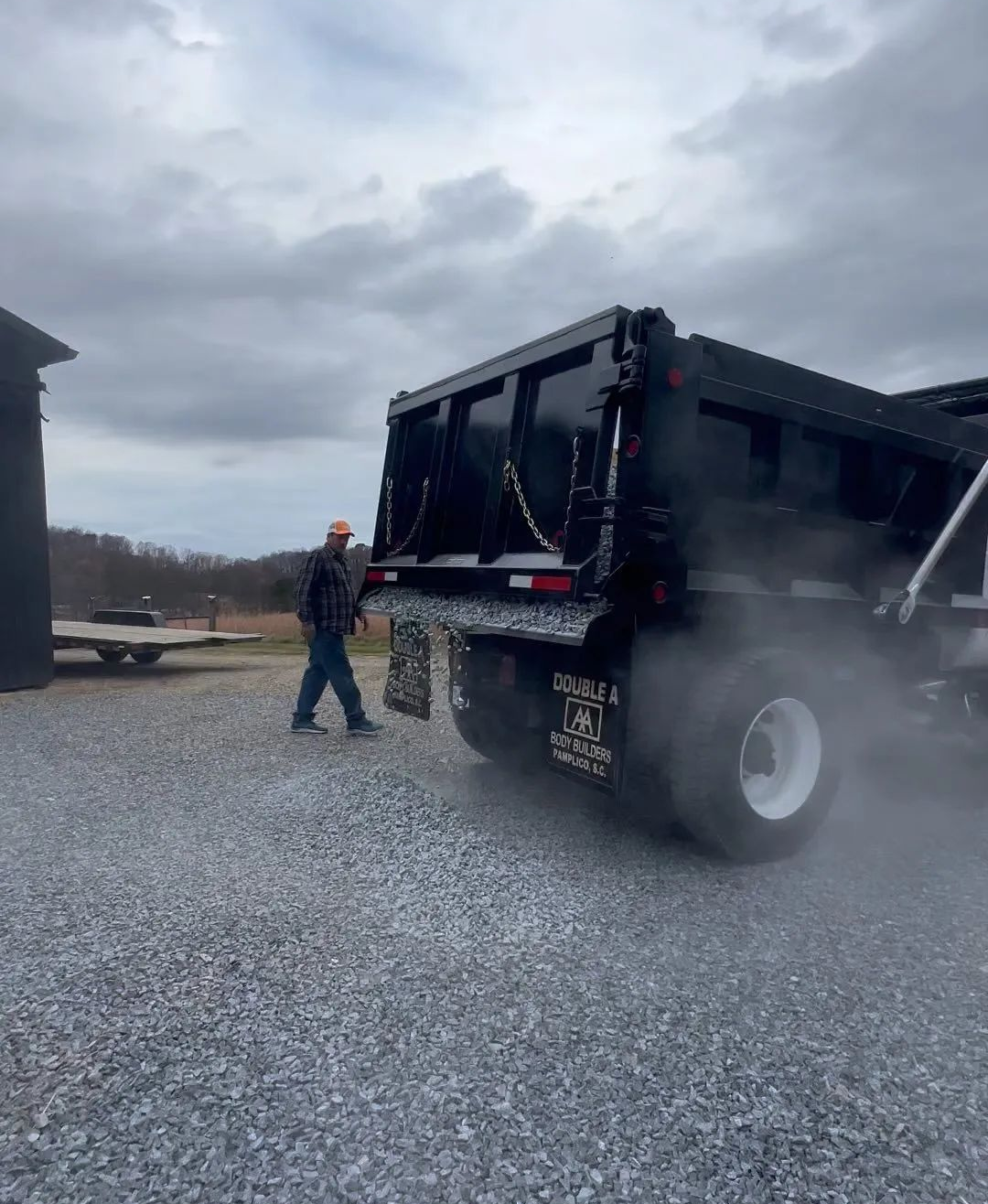
At Absolute One Properties, we bring 30 years of hands-on experience in gravel driveways and excavation to every project we take on in Jonesborough, Tennessee and the surrounding region. We understand how East Tennessee's topography and rainfall patterns create specific erosion and drainage challenges, and we approach each site with the knowledge that comes from working this land for thirty years.
From initial site grading and French drain installation to full excavation and retaining wall projects, we handle the work with the precision that hilly terrain demands. When you work with us, you are working with a crew that has seen what happens when drainage is ignored and knows exactly what it takes to get it right. Absolute One Properties is built on a foundation of real results, and we bring that same standard to every yard, driveway, and slope we touch.
Frequently Asked Questions
1. How do I know if my yard has a drainage problem before erosion starts?
Look for bare soil patches on slopes, sediment deposits at the base of hills, water pooling after rain, and small channels or rills forming in the ground. These are early indicators that runoff is not being managed and that erosion has likely already begun in localized areas.
2. What is the difference between grading and excavation?
Grading reshapes the surface of the land to achieve a desired slope or elevation. Excavation removes material from the ground, often to a significant depth, for foundations, drainage installation, or land clearing. The two processes often go together but serve different purposes on a hilly property.
3. Can a gravel driveway on a slope cause erosion?
Yes. Without proper crown grading, cross slopes, or drainage channels along the edges, water running down a gravel driveway carries loose stone and sediment with it. Proper driveway grading and edge drainage prevent washout and protect the surrounding landscape.
4. How deep should a French drain be on a hilly Tennessee property?
Depth depends on the source of the water you are intercepting. For surface runoff, eighteen to twenty-four inches is often adequate. For groundwater or foundation drainage applications, the pipe may need to sit at or below the footing level, which can mean going four feet or deeper depending on the structure.
5. Is erosion control a one-time fix or an ongoing process?
It is both. The structural work, grading, drainage systems, and retaining walls, is meant to be permanent. But vegetation requires establishment time, outlets need periodic clearing, and drainage infrastructure should be inspected after major storm events to confirm it is functioning as intended.