Can I Get Gravel Delivered to My Property in Fall Branch or Chuckey, TN?
Quick Answer: Yes, gravel can be delivered to rural property in Fall Branch, Chuckey, and the surrounding Northeast Tennessee countryside, and in most cases it can be spread and graded on arrival rather than left in a pile. The two decisions that matter most are which gravel you order and whether the delivery truck can reach where the stone needs to go. Crusher run is the standard for a firm driveway surface because its mix of stone and fines locks up under compaction, while open stone like #57 drains water and works as a base over soft clay. How much you need comes down to the area and depth, figured in cubic yards and often ordered by the ton. On the clay-heavy, sloped lots common out here, matching the gravel to the job and confirming truck access ahead of time is what separates a load that lasts from one you fight for years.
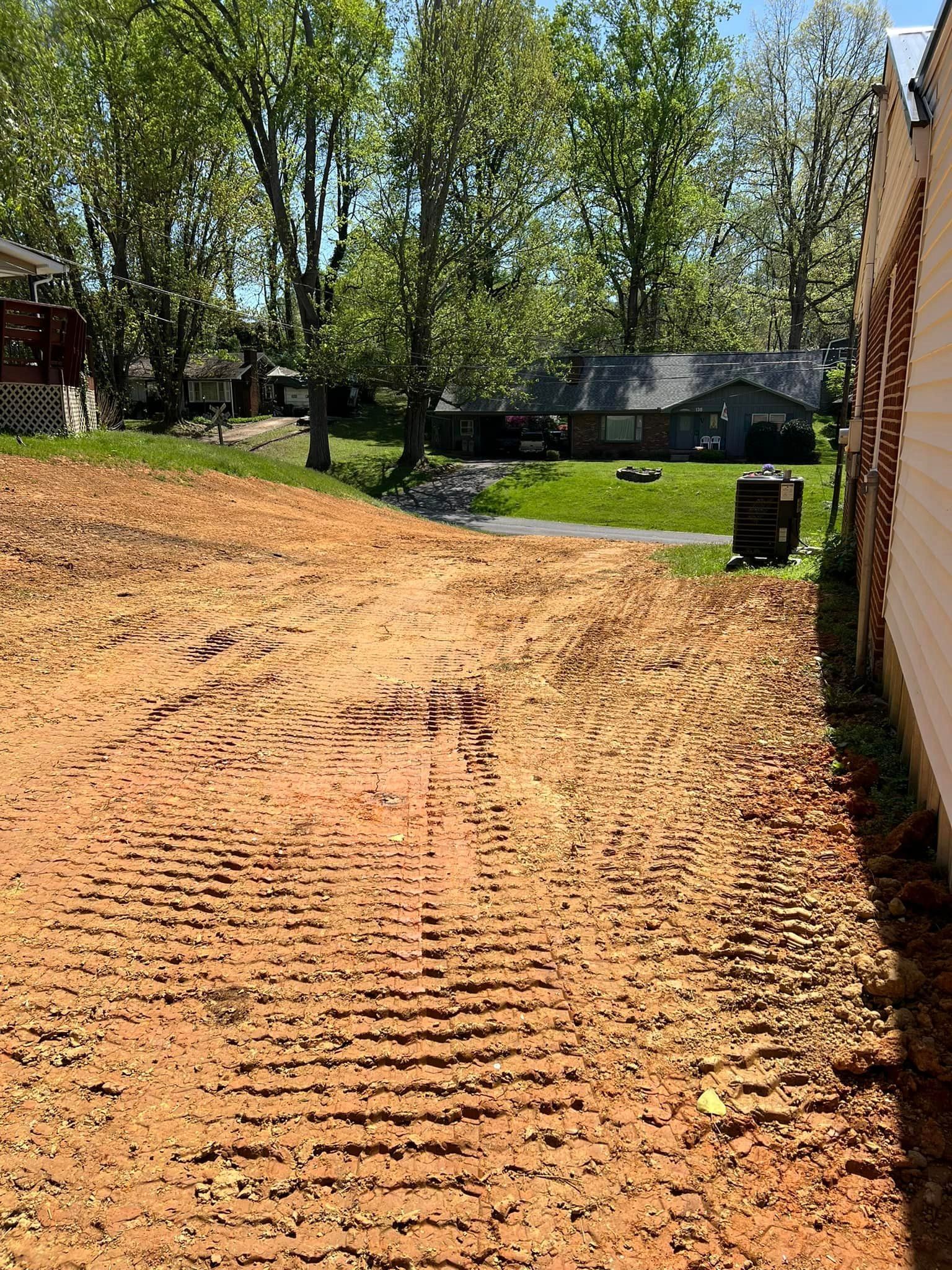
You bought a place off a gravel lane outside Fall Branch, or you are finishing a build on a wooded lot down toward Chuckey, and the ground tells you what it needs. The two-track to the barn turns to soup after a rain. The new house pad has no real driveway yet, just red clay and tire ruts. A parking area for the camper keeps sinking. Somewhere in the back of your mind is a simple question that turns out to have a few layers to it: can you just get a load of gravel dropped here, and if so, what kind and how much.
Out in the rural stretches of Washington and Greene counties, gravel delivery is routine work, but the rural part is exactly what makes the details matter. A dump truck loaded with stone is heavy, the roads and drives into these properties are narrow, and the red clay underneath does not forgive a poor plan. Here is how gravel delivery actually works on a Northeast Tennessee property, from picking the right material to getting the truck in and the stone where you want it.
Yes, You Can Get Gravel Delivered Out Here
What delivery actually covers
Gravel delivery means a loaded truck brings the stone from the quarry or supply yard to your property and unloads it, saving you the trips, the trailer, and the shoveling that come with hauling it yourself. In the country around Fall Branch and Chuckey, this is how most driveway stone, base material, and parking-pad gravel arrives, because the volumes involved are far more than a pickup bed can handle. A single tandem dump load runs into the range of a dozen or more tons of stone, which no homeowner is moving a few buckets at a time.
Dump-and-go versus spread and grade
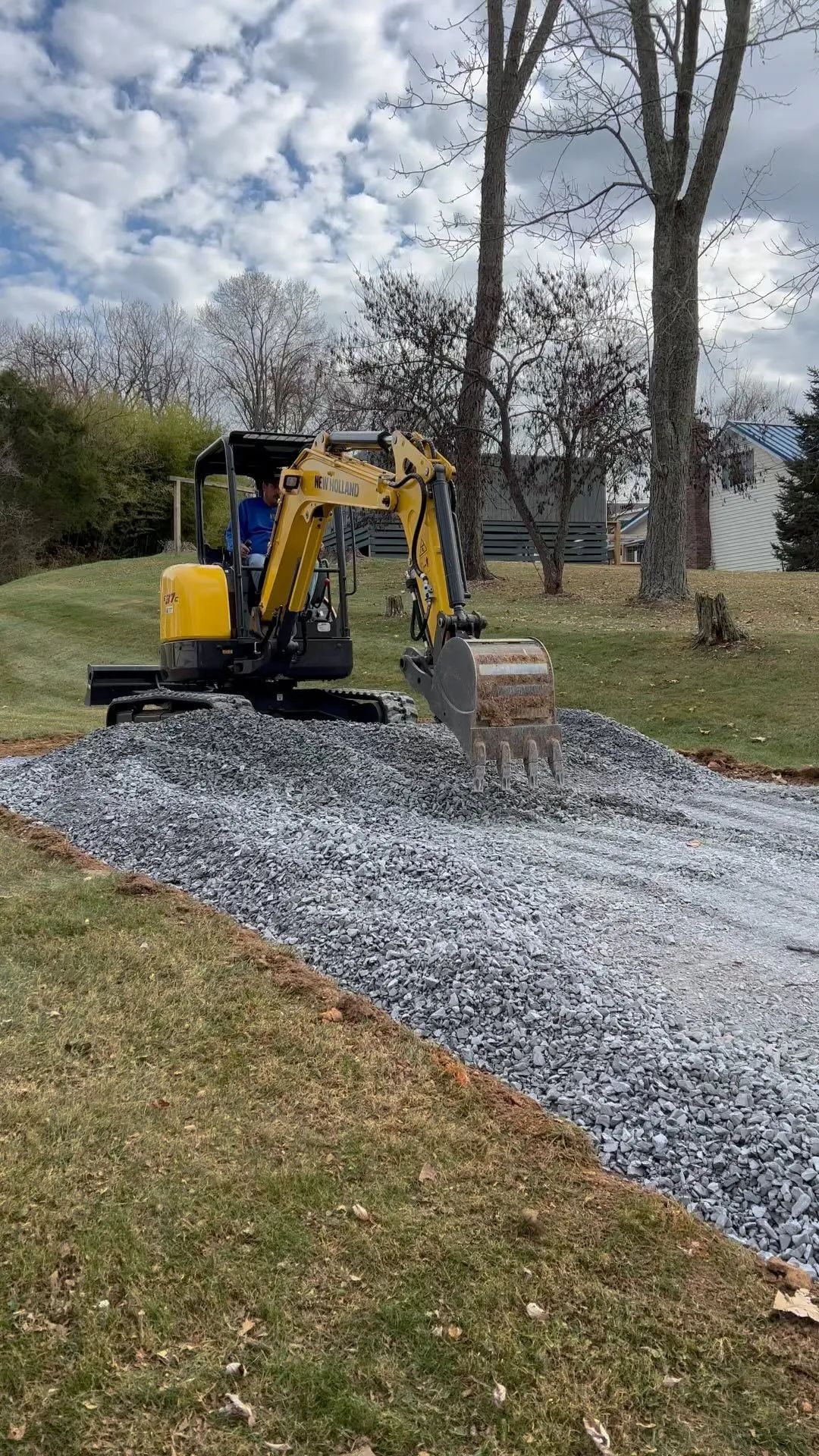
There are two ways the stone can land. The simplest is dump-and-go, where the truck raises the bed and leaves a pile for you to rake or push out yourself. The other is delivery paired with spreading and grading, where the material is laid out to an even depth and shaped, either by dumping in a moving spread down a drive or by following behind with a machine. For a driveway or a pad that has to drain and hold up under vehicles, the spread-and-grade approach is what gives you a surface that works, because loose stone dumped in one spot still has to be moved, leveled, and compacted before it does its job.
Why the rural setting changes the plan
On a tight town lot the truck backs up the drive and dumps. On a rural NE-Tennessee tract, the access road may be long, soft, or steep, the drop spot may be a quarter of the way up a hill, and the ground may be too wet in spots to carry the weight. None of that stops a delivery, but it does mean the route in and the drop location get planned before the truck rolls, not after it is stuck.
How Much Gravel Do You Actually Need?
Ordering the right amount starts with simple geometry and ends with a small buffer, because coming up short means a second delivery and going way over means stone you have to find a home for.
The cubic-yard formula
Gravel volume is figured in cubic yards. Measure the length, the width, and the depth of the area in feet, multiply them together, and divide by 27 to convert cubic feet into cubic yards. A drive 100 feet long and 12 feet wide finished at 6 inches, or half a foot, deep works out to 100 times 12 times 0.5, which is 600 cubic feet, divided by 27, or about 22 cubic yards for that one layer. A new driveway built in several layers needs that figure worked for each lift.
Turning yards into tons
Gravel is often sold and hauled by the ton, so the yards have to be converted to weight. Crushed gravel runs on the order of 1.35 tons per cubic yard, so the roughly 22 yards above comes to around 30 tons of stone for that layer. Weight varies with the stone type and how wet it is, which is why a supplier confirms the conversion for the specific material.
Order a little extra
It is common practice to order roughly 10 percent more than the bare calculation. Stone shifts during unloading and spreading, some works into low spots, and a driveway crown needs a bit more material down the center than a flat figure suggests. A modest buffer keeps a project from stalling one load short.
Warning: Do not order or drop gravel by eye on a soft, wet clay lot without a plan for the base underneath. Spreading fresh stone over saturated, unprepared clay wastes material, because the stone sinks and the surface ruts no matter how much you add. If the ground is soft, the base has to be shaped and, in the worst spots, separated from the clay with fabric before the surface stone goes down. When in doubt about drainage or a boggy area, it is worth having the site looked at before the truck is loaded.
Getting the Truck to the Stone: Site Access
A gravel delivery only works if the truck can reach the drop, and rural access is where deliveries most often run into trouble. Planning the route in is part of the job.
Clear the path and the drop
Before delivery, clear the approach and the unloading area of parked vehicles, trailers, low branches, and anything a raised dump bed could catch. Mark where you want the stone dropped, whether that is a staging pile or the start of a spread, so the driver is not guessing. A loaded truck also needs room to maneuver and, in many cases, to raise a full bed straight up, which takes overhead clearance as well as ground space.
Weight, width, and soft ground
A tandem dump loaded with stone is a heavy vehicle, and soft or saturated ground will rut or bog it just as it would any heavy truck. Narrow rural lanes, sharp turns, and steep pitches all factor into whether a full-size truck can get in or whether a smaller load makes more sense. On wet ground, the timing of the delivery, or protecting the route, can matter as much as the route itself.
Protecting your lawn and existing surfaces
Large delivery trucks can leave ruts or compact soft turf, so the access route is assessed ahead of time. Where the ground is soft, an alternate drop location closer to the road, or laying down protection over the path, keeps the delivery from trading a new driveway for a torn-up yard. The least disruptive plan is worked out before the truck arrives, not improvised once it is on the lawn.
Frequently Asked Questions
What kind of gravel is best for a driveway in Fall Branch or Chuckey?
Crusher run is commonly used for driveway surfaces because it compacts into a stable, durable layer. Softer ground often benefits from larger foundation stone underneath for improved drainage and support. The ideal combination depends on your property's soil conditions and intended usage.
How much gravel do I need for my driveway?
The required amount depends on your driveway's length, width, and planned depth. Measurements determine the necessary cubic yards and tons of gravel. Ordering a small amount extra helps prevent project delays and ensures complete coverage without running short during installation unexpectedly.
Will the delivery truck be able to reach my rural property?
Usually, yes, provided the property offers adequate access. Delivery trucks require sufficient space for turning, stable ground, overhead clearance, and safe unloading. Narrow roads, steep slopes, or muddy conditions may require alternate delivery arrangements or smaller vehicles for successful access.
Can the gravel be spread and graded, or does it just get dumped in a pile?
Both options are available. Gravel can simply be delivered in a pile, or it can be professionally spread and graded. Proper grading creates a level, well-draining surface that performs better, supports vehicles, and helps extend the lifespan of the finished installation.
Why does my gravel keep sinking into the clay?
Soft, wet clay allows gravel to settle because the ground cannot adequately support the weight. Proper site preparation, larger foundation stone, and geotextile fabric in problem areas help stabilize the base, reducing rutting, sinking, and long-term maintenance needs significantly over time.
When is the best time of year to have gravel delivered?
Spring through fall generally provides the best conditions because dry, firm ground supports delivery equipment and installation more effectively. Scheduling during workable weather improves spreading, grading, and compaction while reducing delays caused by muddy, frozen, or excessively saturated site conditions.
Getting the Right Load to the Right Spot
Gravel can absolutely be delivered to a rural property in Fall Branch, Chuckey, and across the Northeast Tennessee countryside, and in most cases it can be spread and graded into a finished surface rather than left in a heap. The parts that decide whether that load serves you for years or frustrates you for seasons are the ones that get settled before the truck rolls: the right gravel for each layer, the right amount figured in yards and tons with a buffer, a base built to handle red clay, and an access route the truck can actually travel. Match those to the ground you have, and a delivery of stone becomes a driveway, a pad, or a base that holds.
Schedule a
gravel delivery and site assessment — Getting stone to a rural Fall Branch or Chuckey property is straightforward once the gravel type, the amount, the base over red clay, and the truck's route in are planned instead of guessed. With 30 years of experience, Absolute One Properties selects the right gravel for each layer, calculates the yards and tons your project needs, confirms access to the drop, and spreads and grades the stone into a firm, well-draining surface for properties throughout Jonesborough, Tennessee. Reach out to plan a delivery that lands the right load in the right spot and holds up on Northeast Tennessee ground.